GIFT City Funds
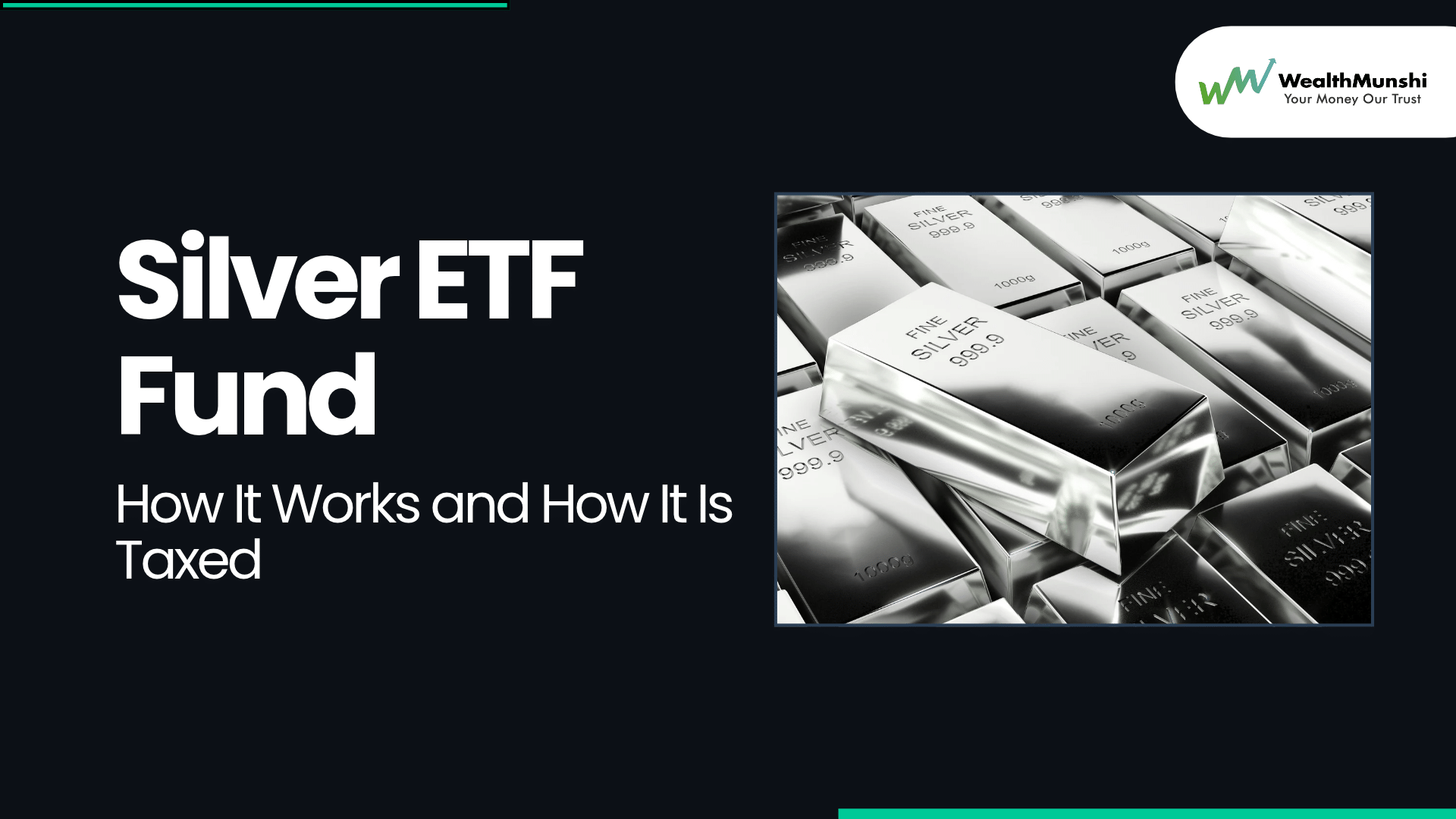
The unit is a claim on vaulted silver, not a bar in your cupboard. Silver etf fund is an exchange-traded scheme that tracks the price of physical silver.
Quick Answer Box
A silver ETF holds physical silver (typically 99.9 percent pure) with a custodian and issues units that are traded on the stock exchange. You require a demat account. The price is based on domestic silver minus costs and tracking difference. No guaranty of returns. They have a few Indian AMCs. Check the expense ratio, volume and tracking error. Tax is usually slab rate for 12 months and 12.5 percent thereafter (no equity exemption). There is no ‘best’ official fund.
What It Is and How It Works
What is a silver ETF fund and how does it work? How silver etf works.
Under SEBI rules, a silver ETF is required to invest most of its assets (usually at least 95 per cent) in physical silver of specified purity, held in a vault by a custodian. The scheme may also not have cash or liquid assets for operations. It is created and redeemed in large creation-unit sizes with authorized participants . Retail investors can buy and sell the units already listed on NSE or BSE through a broker just like a share.
Each unit is a fractional claim on the silver held. The price of a silver etf fund on the exchange is the market price. It is typically traded close to the indicative NAV, though can trade at a small premium or discount depending on demand and liquidity. Returns for silver etf fund = change in silver price over holding period – expense ratio – any tracking difference – transaction costs (brokerage, STT, spread).
What is tata silver exchange traded fund? This is the silver ETF from Tata Mutual Fund (usually with the symbol TATSILV). It is on the same physical-silver structure as competitors from Nippon India (SILVERBEES), ICICI Prudential, HDFC, SBI, Kotak and others. The AMC is known by name. This does not alter the underlying exposure.
A silver ETF Fund of Funds (FoF) just buys the ETF. You can buy the FoF just like a regular mutual fund (many platforms do not require demat) and set up SIPs with more ease. The FoF has its own layer of expenses and usually a longer holding period before it is treated as long term.
Benefits and Whether It Is “Good”
What are the benefits of investing in a silver ETF fund?
- Exposure to silver price without buying, assaying, storing or insuring physical bars or coins.
- Divisibility: you can buy small amounts.
- Exchange liquidity during market hours (subject to volume).
- Transparent holdings and daily NAV.
- No making charges of the kind applied to jewellery.
Is silver etf a good investment?
It is a way to be exposed to the price of silver. Silver prices are volatile and influenced by industrial demand, investment flows, currency movements and supply. The past one-year or three-year returns (which have been strong in some recent windows) do not predict the next period. A silver ETF is neither good nor bad on its own. Provided the silver-price risk suits the portfolio and the investor is happy with the units falling as well as rising, it works. It’s not a substitute for emergency cash or for equity growth over long time periods.
Who Offers Them and How to Compare
Which companies offer silver ETF funds in India?
Silver ETFs have been launched by Nippon India, ICICI Prudential, HDFC, SBI, Tata, Kotak, Aditya Birla Sun Life, Axis, DSP, Mirae Asset, UTI, Edelweiss and Zerodha, among others. AUM is not the same as liquidity. Nippon’s SILVERBEES has historically been one of the largest and most traded.
Compare silver ETF funds available to Indian investors on :
- Total expense ratio (less is better, ceteris paribus)
- Assets under management and average daily volume (the higher the better, usually meaning tighter spreads).
- Tracking error/difference versus domestic silver price (lower is better).
- Bid-ask spread on the day of your trade.
Large silver ETFs typically have expense ratios in the ballpark of 0.35 percent to 0.60 percent. These numbers move Always check the latest factsheet There is no SEBI or AMFI ranking of the ‘best’ silver ETF. A wide spread can compensate for a lower TER on an illiquid name.
Tax Treatment
For silver ETF units sold on or after 1 April 2025:
- Held 12 months or less: gains generally taxed at slab rate.
- Held more than 12 months: long-term capital gains at 12.5 percent without indexation.
Silver ETFs are not eligible for the ₹1.25 lakh annual exemption like listed equity and equity-oriented funds. For the 12.5 percent rate, silver FoFs typically hold for a longer period (sometimes over 24 months). Check with current law and with the capital-gains statement of your broker to determine the exact treatment of your purchase and sale dates. AIS classification has not always matched broker statements. Rule on statutory holding period applies.
Financial & Technical Data Matrix – Silver ETF Essentials
| Item | Typical position |
| Backing | Physical silver ~99.9% purity in vault |
| How you buy | Exchange via demat |
| Price | Live market price (near NAV) |
| Returns | Silver price change minus costs |
| Expense ratio | Commonly 0.35–0.60% (changes) |
| Tax (>12 months, post-1 Apr 2025) | 12.5% (no equity exemption) |
| Official best | None |
Risk Analysis: Eleven Silver-ETF Errors
- Treating a strong past year as a forecast.
- Ignoring tracking difference.
- Buying an illiquid ETF and crossing a wide spread.
- Assuming equity-style ₹1.25 lakh exemption applies.
- Confusing the ETF with a silver FoF (different holding period and extra layer).
- Expecting the market price to equal NAV every second.
- Comparing schemes on different dates or return windows.
- Using silver ETFs as a short-term trading vehicle without accepting volatility.
- Forgetting brokerage and STT.
- NRIs assuming every platform and tax treaty treats the units identically.
- Ranking “best” from an advertisement rather than TER, volume and tracking error.
Generic Advice vs. Strategic Thinking Matrix
| Decision Point | Generic Advice | Strategic Thinking |
| Good investment? | “Silver is rising” | Price exposure only; volatility is real |
| Choice | “Highest recent return” | TER + volume + tracking error |
| Tax | “Like equity” | 12.5% after 12 months, no ₹1.25 lakh exemption |
| How to hold | “Any app” | Demat for ETF; FoF if SIP ease matters more |
| Price | “Fixed” | Live market price |
Strategic thinking checks liquidity and tracking before the headline return.
Closing Perspective
A silver ETF fund offers exchange-traded exposure to physical silver held by a custodian. Units are traded in a demat account. Silver minus costs. Price and returns . Tata, like other Indian AMCs, provides them. The advantages are convenience and liquidity over physical metal. The risks are price volatility and tracking error. Tax is not the equity regime. There is no official best fund.
This is general information, not a recommendation to buy silver or any scheme.
People Also Ask
What is a silver ETF fund?
An exchange-traded scheme that holds physical silver and whose units trade on the stock exchange.
How does a silver ETF work?
The AMC holds vaulted silver. You buy and sell units on NSE/BSE via a demat account. The price tracks domestic silver minus expenses.
Is a silver ETF a good investment?
It is price exposure to silver. It can rise or fall. Past returns do not guarantee future results.
What is the Tata Silver Exchange Traded Fund?
Tata Mutual Fund’s silver ETF. It follows the same physical-silver structure as other Indian silver ETFs.
Which companies offer silver ETFs in India?
Nippon India, ICICI Prudential, HDFC, SBI, Tata, Kotak, Aditya Birla Sun Life and others.
How do I compare them?
Expense ratio, AUM, trading volume and tracking error on the same date. No official ranking.
How are silver ETF gains taxed?
Generally slab rate if held 12 months or less; 12.5 percent if held longer (for sales on or after 1 April 2025). No equity exemption.
How can WealthMunshi help?
WealthMunshi provides investment-advisory support on whether commodity exposure fits a portfolio, not a product ranking.
Silver-price exposure is volatile and taxed differently from equity. Readers considering a silver ETF or FoF can schedule a fit-and-tax review before the first purchase.